



Late-Mover Product Strategy for Better AI UX
Being late to AI feels like a product death sentence. Competitors already shipped assistants, users already built habits, and your roadmap still says “catch up.” Apple’s latest software wave—including iOS 27, the next version of iPhone software, and a new Siri AI approach—makes a sharper case: a late-mover product strategy can turn delay into research. Copy proven AI UX patterns, skip the failures everyone else already paid for, then spend the real budget on brand differentiation and ecosystem integration.
What follows is a product-design reading of that playbook: how the platforms were framed, what Siri AI actually does, which patterns were lifted from competitors, and where Apple chose to look like Apple instead of like another chatbot.
Late-Mover Product Strategy Starts With Proven AI UX Patterns
When you arrive late to AI, the fastest path to a top-tier assistant is copying UX patterns competitors already proved—and skipping the dead ends they already paid for.
Apple’s developer conference used to walk platform by platform: iPhone software, then Mac, then iPad, and so on. This time the framing shifted. Features were presented as evolutions of a full ecosystem, not as device-specific silos, because most of what was unveiled works the same way across Apple’s devices. A Mac and an iPhone are treated as one coherent environment: the same capabilities, the same solutions, running consistently from one device to the next. That is already a product lesson. Coherence across surfaces beats a tour of isolated OS updates.
The center of gravity was still AI, and Apple has clearly lagged. Large language models such as ChatGPT, Gemini, and Claude moved the category; Apple did not. In 2024, a heavily promoted AI-rethought Siri never fully arrived: a visual rebrand showed up, but the deeper intelligence upgrade did not. The following year brought more small announcements and little that actually shipped. Expectations for a real catch-up were high.
The answer this year is Siri AI: familiar Siri, with LLM technology integrated natively. The name is not clever. It is clear. The product promise is an assistant that answers far more questions, speaks more naturally, and pulls external knowledge to improve response quality. Arriving late is not elegant. It did, however, open a design window: study what already works, re-implement it, and avoid inventing a weaker chat paradigm from scratch.
On capability, three moves matter for product design.
- Question answering. Today, many Siri questions dead-end in “I don’t know—search the web.” Siri AI is meant to answer those questions the way ChatGPT or Gemini would. Under the hood, Apple partnered with Google to use Gemini technology, running it on Apple’s own servers and, in part, on the iPhone or Mac—leaning into privacy and security messaging and, potentially, cost control. For end users, that architecture mostly shows up as a privacy story rather than a visible interaction change.
- App interaction without DIY connectors. Connecting ChatGPT, Claude, or Gemini to external tools usually means MCP or plugins—technical glue most people never set up. Apple’s advantage is that native apps can connect automatically through Shortcuts and Intents, proprietary technology already embedded in iPhones and Macs. Users do nothing; Siri can act across apps. That is a massive onboarding win versus forcing connector setup.
- System-wide infusion. Because Apple owns the device software, Siri AI can live in Safari, Reminders, Messages, and beyond. Standalone assistants installed as apps cannot freely touch notifications and the rest of the system the same way.
The design lesson is not “be Apple.” It is that a late-mover product strategy can be deliberate: treat competitors’ experiments as unpaid research, then ship AI UX patterns users already understand.
They did that aggressively. A Siri AI conversation visually echoes Gemini or ChatGPT in response format and display patterns. On Mac, the experience is nearly a copy of ChatGPT’s app: a small overlay window that expands into a fuller mode—today the strongest Mac LLM client pattern, simply duplicated. Look at the patterns that work, duplicate them, and you can land one of the stronger LLM apps on the market without winning the originality contest.
They went further than the chat canvas. In conversation, they surface small app widgets—a weather fragment or a map fragment inline—reusing the idea popularized by Anthropic’s MCP apps for Claude. Right-click a file and a contextual menu lets you ask Siri about it: the same behavior Notion popularized when you select text or an element and get an AI search box. Spotlight, the search bar on Mac and iPhone, will detect whether your input is a question and route to Siri AI or to classic search—the same idea the DIA browser shipped a few months earlier.
None of that is elegant as originality. It is elegant as product velocity. Competitors also failed often. Arriving later lets you skip that phase, take behaviors users already know how to use, and ship a coherent assistant experience faster. Copying, in this case, is a way to go fast. Differentiation comes after you have copied the parts that already work.
Apple’s path to Siri AI — click each step
Brand Differentiation After You Copy AI UX Patterns
Once proven AI UX patterns are in place, invest differentiation in brand—emotional history UI, tool-framed wording, and visual delight—not in reinventing the chat paradigm.
Copying gets you to parity on interaction quality. Brand differentiation is where you stop looking like “another late LLM.” Apple’s second move is brand: emotion, humanity, and recognizable interface moments—spent on surfaces almost nobody else treated as a product.
Most LLM products treat conversation history as a flat list of past chat titles. It may be practical. Emotionally, it does almost nothing. Apple turned that neglected surface into a selling point: visual summaries, spacious cards, and imagery or visuals generated during the chat—something you want to explore rather than a sad list you skim. That matches a DNA they have been pushing toward: tech that feels less cold and more human, invested in a place almost nobody else invested.
Wording follows the same logic. Across the industry, waiting states often say thinking—three dots while the model “reasons.” In demos and tests of Siri AI, Apple leans on working instead. That is coherent with positioning AI as a tool, not an alternate human. Many people fear replacement; language that frames a machine as a person intensifies that fear. “Working” keeps the assistant as an assistant—an instrument, not a rival competing with you.
The third brand lever is visual delight: a highly crafted interface. Demos show polished charts and renders, conversation layouts that evolve as the exchange progresses, and an elegant voice-customization UI that is genuinely distinctive. On VisionOS, a Siri orb moves with you in augmented reality so you can look at it to speak—highly visual, used by few people given Vision Pro’s limited success, but still a strong, media-friendly differentiator against the flat look of most AI products. These are recognizable moments that get talked about and travel in coverage. They pull the product out of the generic AI slab.
Google has also been warming Gemini’s visuals toward something more alive and human. ChatGPT and Claude invest less here—different markets, different company types. Google does it its way; Apple does it its way. The point for product teams is not to copy Apple’s orb. It is to pick the surfaces where your brand actually has permission to feel different, after you have already shipped the patterns people expect.
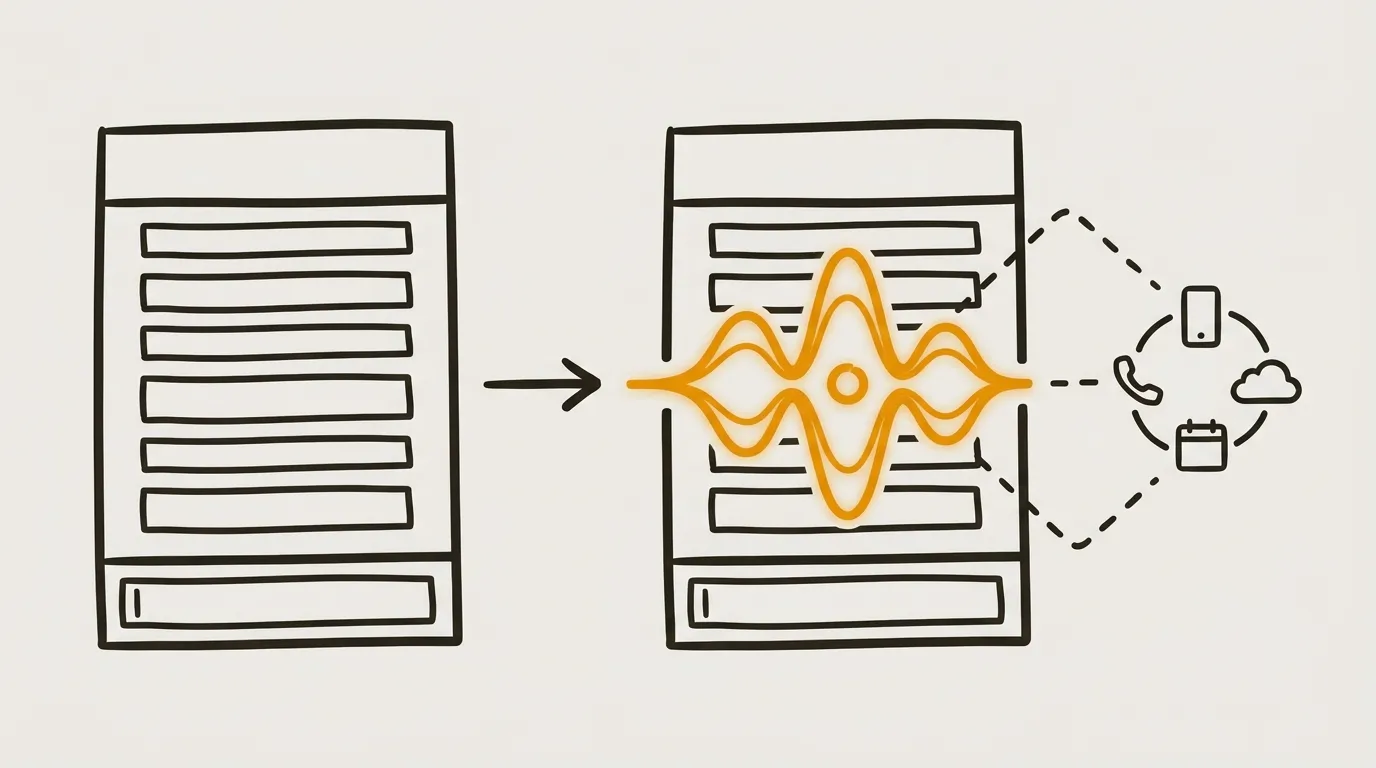
Ecosystem integration closes the loop: suggestions in Messages, detection in Safari, simpler reminder creation in Reminders. That is classic Apple distribution, and it reinforces why owning the OS compounds assistant UX beyond what a third-party app can touch. The last opportunity they seized is the one most late movers cannot fake: put the assistant where the user already is, not only inside a chat window they have to remember to open.
Typical LLM history
Apple’s history surface
Final Thoughts
Being late on AI is only a liability if you waste the delay. The rational play is to learn from everyone else’s successes and failures, re-implement what already works, then invest in your marketing DNA—so you show up with a strong solution and visible differentiators, not as “the competitor who finally arrived.” Copy to go fast. Differentiate where your brand actually creates value.
This reading may be biased by how often I have admired that company, even while trying to stay critical. If you see the same late-mover dynamics in your product org—or a very different take—share your thoughts, or connect with me on LinkedIn to keep the conversation going on digital product innovation.
FAQs
What is a late-mover product strategy in AI UX?
It means arriving after competitors, treating their experiments as research, shipping proven AI UX patterns first, then investing differentiation in brand and ecosystem rather than inventing a weaker chat experience from scratch.
What is Siri AI in practical product terms?
Siri AI is Siri with native LLM integration: broader question answering, more natural speech, external knowledge for better answers, automatic interaction with native apps via Shortcuts and Intents, and presence across system surfaces such as Safari, Reminders, and Messages.
Why can copying competitor AI UX patterns be a sound late-mover move?
Because rivals already explored what works and what fails. Reusing proven chat formats, overlay windows, inline app widgets, contextual AI menus, and question-aware search lets you skip failed experiments and ship a top-tier experience faster.
How did Apple use brand differentiation after copying AI UX patterns?
By turning chat history into visual summary cards, preferring “working” over “thinking” to frame AI as a tool rather than a person, and investing in visual delight—including an elegant voice customization UI and a VisionOS Siri orb—while still weaving the assistant into the wider ecosystem.